Home > Investor Relations > Management policy > Massage from President

Investor Relations

Management policy

For Shareholders and Investors

Overview of Performance and Initiatives in the Year Ended March 31, 2009 (from April 1, 2008 to March 31, 2009)

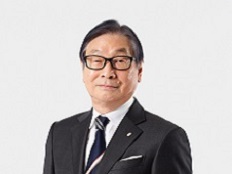
Ken Mizutani President, CEO
Ken Mizutani
President, CEO

Both sales and income declined in severe market circumstances. However, unit sales grew steadily for ARTZ®, and solid progress was made in the development of new drugs and the expansion of production facilities.


In the year ended March 31, 2009, domestic sales continued to expand, absorbing the effects of cuts to the National Health Insurance´s reimbursement prices for drugs, thanks to a double-digit increase in deliveries of ARTZ®, a main product, to medical institutions. Consolidated net sales declined because of lower overseas sales, attributable to the impact of yen appreciation, and a reaction to shipment growth from carryovers in the previous term. Income also declined as a result of higher depreciation associated with the commencement of operations at a new production facility and an increase in R&D expenses, as well as valuation losses on bonds attributable to the global financial crisis posted as extraordinary losses.

Meanwhile, new drug development, a growth source, showed steady progress. We applied to the U.S. Food and Drug Administration (FDA) for the approval of Gel-200, a new joint-function improving agent, in July 2008. The application is currently under examination. We also started Phase I trials for SI-615, a therapeutic agent for rheumatoid arthritis, in Japan in September 2008. In addition, we completed Phase III trials for SI-602 in the United States to add shoulder osteoarthritis indications to SUPARTZ®.

In another move, the Takahagi Plant No. 4 Production Building, which we set up to meet growing demands for ARTZ Dispo®, started production in October 2008. A stable supply system was completed with the commencement of operations at the production facility.

Despite declines in sales and income, we achieved steady progress in our initiatives to solidify our foundations for growth, including those for increasing sales of main products, developing new drugs and bolstering production facilities.

10-Year Vision and Medium-Term Plan

We will sustain steady growth as a "Global Category Pharma*" by focusing its research and development on glycoscience.


The business environment facing the pharmaceutical industry has been changing rapidly, the result of factors such as increasingly tight medical budgets in many countries, large-scale, cross-border corporate restructuring, and intensifying competition for developing new drugs.

In these conditions, we have drawn up the "Long-Term Vision (10-Year Vision)," which seeks to continue our growth as a "Global Category Pharma" with a research and development focus on glycoscience, in which we specialize. The goals set out in this Vision are establishing competitiveness in the global market and sustaining steady growth with constant drug development based on cutting-edge glycoscience research. As the first step toward achieving these goals, we launched a Medium-Term Plan that covers a period of three years, starting the year ending March 31, 2010. We will build strength and create core systems to establish a basis for realizing the Vision, with "GPS" (global, powerful and sustainable) as our slogan.

*A Global Category Pharma is a company developing new drugs that aims to bolster its international competitiveness by narrowing its research and development down to its areas of expertise. A Global Category Pharma is proposed as a type of a pharmaceutical company that will endure in the "New Vision for the Medicine Industry" set out by the Ministry of Health, Labour and Welfare.

Overview of Performance in the Year Ended March 31, 2009

Trend in Net Sales
Trend in Operating Income and Net Income

The domestic market for pharmaceutical companies remained severe, owing to continued measures to reduce medical expenses, such as cuts to the National Health Insurance´s reimbursement prices for drugs in April 2008, and activities to encourage the use of generics. In addition, growth for pharmaceutical markets overseas also declined because of measures to cut drug expenses, especially in advanced nations.

In this environment, net sales for the year under review declined 1.5% year on year, to ¥27,207 million, reflecting the effects of the yen appreciation and a reactionary fall in overseas sales attributable to concentrated shipments in the previous year and a temporary rise in royalties earned, which offset steady growth in sales volume that in turn had absorbed the effects of reduced drug prices in the Japanese market. Operating income declined 29.2% year on year, to ¥4,729 million, as a result of a decline in gross profit associated with higher costs, including depreciation in connection with the operational launch of the Takahagi Plant No. 4 Production Building and an increase in selling, general and administrative expenses led by R&D expenses. Ordinary income declined 25.8% year on year, to ¥5,094 million. Net income was down 25.2% year on year, to ¥3,175 million, reflecting valuation losses on bonds posted as extraordinary losses because of the global financial crisis.

Overview of Sales by Business Segment

Net Sales by Business Segment
Trend in Overseas Sales

<Pharmaceuticals>

The domestic market for ARTZ®, a joint-function improving agent, continued to expand, as the elderly population increased and activities to raise public awareness about knee osteoarthritis continued in various media in cooperation with our sales partner, Kaken Pharmaceutical Co., Ltd. Sales increased for ARTZ®, with a rise in deliveries to medical institutions through sales promotion activities, such as encouraging the use of this product by internists and surgeons in addition to orthopedists, more than offset the effects of reduced drug prices.

In the U.S. market, the largest market overseas, local sales rose in volume terms for SUPARTZ®, despite increasingly tough competition. However, our export sales fell, in reaction to the previous year´s sales growth that reflected shipment carryovers from the year ended March 31, 2007 and yen appreciation. Exports to China grew, thanks to the steady penetration of ARTZ®centered on large cities.

Deliveries of OPEGAN®to medical institutions grew, an agent used in ophthalmic surgeries, the result of efforts to boost customer satisfaction undertaken with our sales partner, Santen Pharmaceutical Co., Ltd. However, sales of Seikagaku´s OPEGAN®were unchanged from the level of the previous year, influenced by drug price cuts.

With respect to MucoUp®, a submucosal injectant for endoscopes, we sought to establish the product and expand its use in the market in collaboration with our sales partner, Johnson & Johnson K.K.

As a result of the developments stated above, net sales for pharmaceuticals increased 1.0% year on year, to ¥20,405 million.

<Bulk products>

Given the termination of liver hydrolysate manufacturing and sales following a business transfer and reduced sales for hyaluronic acid. As a results, net sales for bulk pharmaceutical products fell 17.6% year on year, to 1,492 million.

<Research reagents and diagnostics>

Endotoxin reagents for quality control achieved steady sales in Japan and abroad. Net sales for these reagents declined, however, because of yen appreciation, which offset a sales increase for a consolidated subsidiary in the United States on a local currency basis. As a result, net sales for research reagents and diagnostics slipped 0.8% year on year, to ¥4,824 million.


Improving shareholder value

We will continue to practice a management approach that continuously secures the trust of its stakeholders.


We regard efforts to increase shareholder value through the sustained development of original new drugs, profitability improvement, and the appropriate return of profits to shareholders as our most important management challenges. We have introduced a performance-linked dividend policy that emphasizes the dividend payout ratio. Based on this policy, we seek to increase dividends while maintaining the dividend payout ratio at 30% with basic annual dividends of ¥20 per share. Based on this policy, we set year-end dividends for the year under review at ¥12.50, annual dividends at ¥25.00, including interim dividends of ¥12.50, and the dividend payout ratio at 44.9%. We also acquired 700,000 of our common shares as treasury stock for an acquisition value of ¥748 million in the year under review. In addition, we established a shareholder benefits program to express our gratitude to the support provided by shareholders and to motivate more shareholders to be long-term holders of Seikagaku stock by increasing their attractiveness as an investment target.

We will sustain growth and secure management transparency in a bid to remain a company that is worthy of the trust of its shareholders and other stakeholders.

We ask our shareholders for their continued understanding and support.

June 2009
Ken Mizutani
President, CEO
Ken Mizutani

PageTop

Copyright SEIKAGAKU CORPORATION All rights Reserved.