Home > Investor Relations > Message from President > For Shareholders and Investors

Investor Relations

Message from President

To Our Shareholders and Investors

Overview of Results and Management Initiatives for the Year Ended March 31, 2010

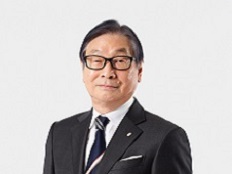
Ken Mizutani President, CEO
Ken Mizutani
President, CEO

Expanding domestic sales of ARTZ® were reflected in higher sales and income. Overseas, there was a pleasing trend in local sales in the growth market of China.


The business environment for the pharmaceutical industry remained challenging in the year under review (April 1, 2009–March 31, 2010), in part because of continuing moves to curtail healthcare spending in Japan and other countries. Despite this, strong sales of our pharmaceutical products in Japan allowed us to achieve growth in both sales and income.

In the Japanese market, we continued our efforts to expand the market for ARTZ®, joint-function improving agent through a campaign to raise public awareness about knee osteoarthritis. To ensure that Seikagaku would benefit from the resulting market growth, we also enhanced of promotion of ARTZ® and supplied academic information to medical professionals, including not only orthopaedists, which are a key target for ARTZ®, but also internists and surgeons. These efforts resulted in sales growth.

In overseas markets, export sales to the United States were lower because of yen’s appreciation and a decline in local selling prices brought on by the tightening of insurance reimbursement criteria by private insurance companies. Exports to China were lower because of shipment carryover into the following fiscal year. However, local sales increased by around 30%. Given the size of the Chinese market and the pace of economic growth, we believe that there is potential for further sales expansion.

In profit, the first full-year of operation at the new No. 4 Production Building at the Takahagi Plant increased depreciation cost. However, selling, general and administrative expenses, especially R&D expenses, were reduced, as income was higher than the previous year.

Progress on R&D Projects

We will make every conceivable effort to gain approval for Gel-200, while also moving forward with new drug development, such as SI-6603.


One of our strategic products for the U.S. market is Gel-200, the joint-function improving agent, for which the premarket approval application has been pending. We were disappointed to receive a notification from the FDA in January 2010 stating that the product was “not approvable”. Seikagaku believes that Gel-200 can provide American patients with a viable option in the treatment and therapy of knee osteoarthritis, and we plan to submit an amendment to the FDA by the end of June 2010. Our priority now is to develop the optimal approach for our continuing efforts to obtain approval.

Other projects are proceeding as planned. In September 2009, we filed an approval application for SI-602. The purpose of this project is to obtain approval for an additional indication of shoulder osteoarthritis for SUPARTZ® (the name under which ARTZ® is sold in the US).

In August 2009, we completed target patient enrollment in Japan for Phase II/III clinical trials of SI-6603, being developed for use in the treatment of lumbar disk herniation. We are now conducting long-term post-administration monitoring of these cases. The results will be obtained by the end of 2010, and we plan to submit an approval application in mid-2011.

Progress under the Mid-term Plan

Initial progress during the first year covered by the mid-term plan was generally positive.

In March 2009, we formulated a 10-year vision for the future evolution of Seikagaku as a “Global Category Pharma*” through R&D focusing on glycoscience, a field in which we excel. We took our first step on our path to this future with the start of the three-year mid-term plan. We are currently working under that plan to lay foundations for the realization of our vision.

As the first year of the mid-term plan drew to a close, it became apparent that the launch of Gel-200 on U.S. market would be later than originally planned. However, we were able to move forward in other areas, including stable operation of our new drug manufacturing building and the development of organizational systems to support the consistent development of new drugs. Sales results were also encouraging. Our forecast for the growth of ARTZ® sales in Japan was largely realized, and local sales in China also showed healthy growth. We will continue to build up our basic corporate strengths and core systems under the mid-term plan, which we have named “GPS” (Global, Powerful, Sustainable).

*A “global category pharma” is defined as a company that achieves international competitiveness by targeting its research and development toward a specialized field to develop new drugs for world markets. This is one strategy for long-term success identified by the Ministry of Health, Labor and Welfare in its vision for Japan’s pharmaceutical industry.

Summary of Results for the Year Ended March 2010

Trend in Net Sales
Trend in Operating Income and Net Income
Net Sales by Business Segment
Trend in Overseas Sales

Business conditions for the pharmaceutical industry remain difficult. Factors affecting the industry include ongoing moves in Japan and elsewhere to curb medical costs. In Japan, the government is encouraging use of generic drugs, and overseas, criteria for reimbursement under health insurance schemes have been tightened.

Our net sales for the period under review were 1.5% higher year-on-year at ¥27,617 million. This growth was achieved despite lower overseas sales resulting from yen’s appreciation. Contributing factors included higher sales of pharmaceuticals in Japan. Depreciation cost increased for the No.4 Production Building at the Takahagi Plant, which started operation in October 2008. However, selling, general and administrative expenses, especially R&D expenses, were reduced as operating income increased by 8.1% year on year to ¥5,110 million. Ordinary income was 0.4% higher at ¥5,114 million, due to the effects of currency exchange losses, especially on foreign currency-denominated bonds. At ¥3,575 million, net income was 12.6% higher than the previous year, which was impacted by extraordinary losses related to corporate bond holdings.

Analysis of Sales by Business Segment

<Pharmaceuticals>

One of our flagship products is ARTZ®, which is used to improve joint function. The domestic market for this product continued to expand and sales were higher, reflecting growth in the aging population, and because of a campaign in collaboration with our sales partner, Kaken Pharmaceutical Co., Ltd., to raise awareness about knee osteoarthritis through information placed in various media. In overseas markets, export sales to the United States declined under the impact of yen’s appreciation and lower local selling prices. China is a growth market, and ARTZ® has gained an excellent reputation for quality there, especially in major cities. While exports were lower because some shipments carried over into the next fiscal year, local sales continued to grow.

Sales of OPEGAN®, the ophthalmic surgical aid, were higher and our market share expanded further. We attribute this growth to an emphasis on medical practitioner needs in our sales promotion activities in collaboration with our sales partner, Santen Pharmaceutical Co., Ltd..

Sales of MucoUp®, a surgical aid for use in endoscopic mucosal resection, were also higher, following efforts in cooperation with our sales partner, Johnson & Johnson K.K. to expand the market by promoting the increased use of endoscopic surgical techniques.

Total net sales in the pharmaceuticals segment amounted to ¥21,116 million, an increase of 3.5% over the previous year’s result.

<Bulk Products>

Sales of bulk products were 6.8% higher year-on-year at ¥1,593 million. This growth resulted primarily from increased sales of hyaluronic acid.

<Research reagents and diagnostics>

Domestic sales trends remained firm, led by endotoxin-detecting reagents for use in quality control. However, overseas sales were eroded by yen’s appreciation, with the result that total net sales in this segment were 5.1% lower at ¥4,580 million.


Improving Shareholder Value

We are determined to maximize shareholder value while earning the steady trust of all stakeholders.


We will continue to work toward the improvement of shareholder value by achieving sustained growth as a “Global Category Pharma.” We also regard the maximization of shareholder returns as a management priority. Our basic policy on profit distribution calls for an appropriate balance between dividend payments, internal reserves and the pursuit of a flexible capital policy. Under our performance-oriented dividend policy, priority is given to the dividend payout ratio. We aim to maintain the payout ratio at 30%, with an annual dividend of ¥20 as the base amount, and to work toward further improvement.

In the previous fiscal year, we introduced a shareholder benefit program, both as a token of our gratitude for your support, and also with the aim of enhancing the attractiveness of our shares and encouraging more investors to become long-term shareholders.

We are determined to achieve sustainable growth and maintain management transparency, so that we can continue to earn the trust of all stakeholders and their recognition of our contribution to society. In these endeavors, we are grateful for the continuing support of shareholders.

June 2010
Ken Mizutani
President, CEO
Ken Mizutani

PageTop

Copyright SEIKAGAKU CORPORATION All rights Reserved.